As this course comes to an end, I’m left with a sense of pride on what my group and I have accomplished this term. Coming together at the start of the term was easy as we had all worked together in the previous term; however, the task ahead of us was unfamiliar and daunting – how would we be able to create a website in 3 months?? Nonetheless, we put our heads together, brought our skills, prior knowledge and expertise, and ventured on to expand our nodes of knowledge through our connections with each other as well as the social activities presented throughout the course.
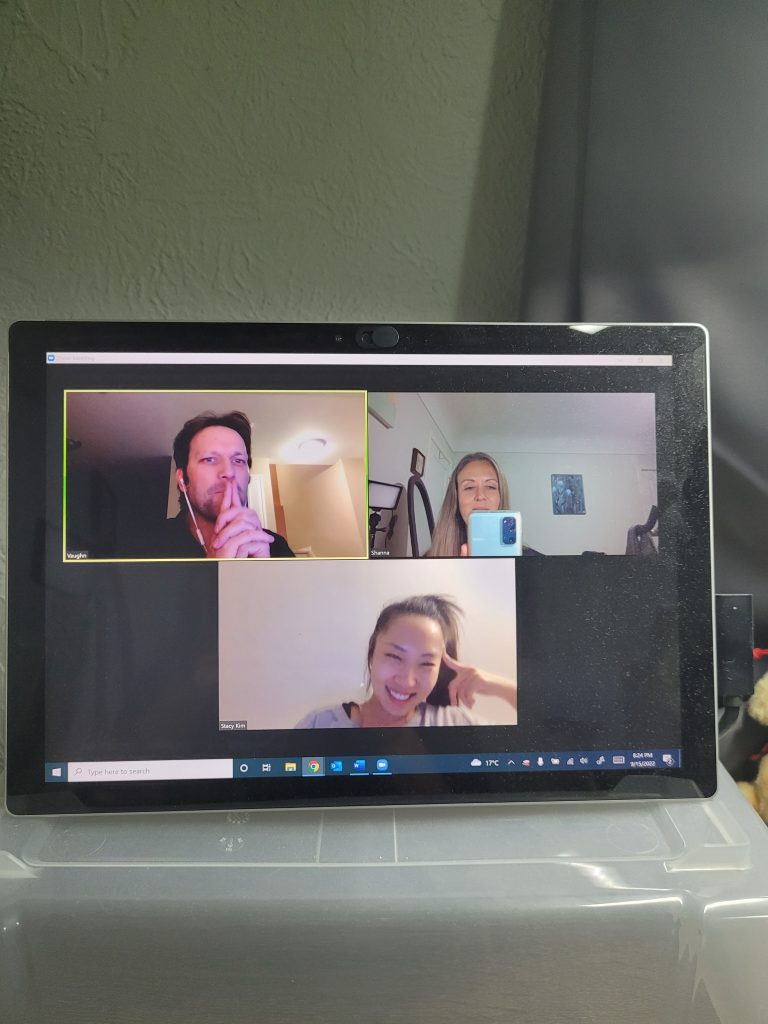
The story we wanted to tell came together when we had opportunities to meet synchronously and reassure each other that we were indeed heading in the right direction. We listened, empathized, discussed ideas and forged on! As we watched our individual interests unfold through our discussions and blog posts, we became more focused in our research and developed activities and content that aligned with our topic: Assistive and Adaptive Tools for Literacy Development. The course template activity formalized our essential questions and learning outcomes and from here, our website vision materialized!
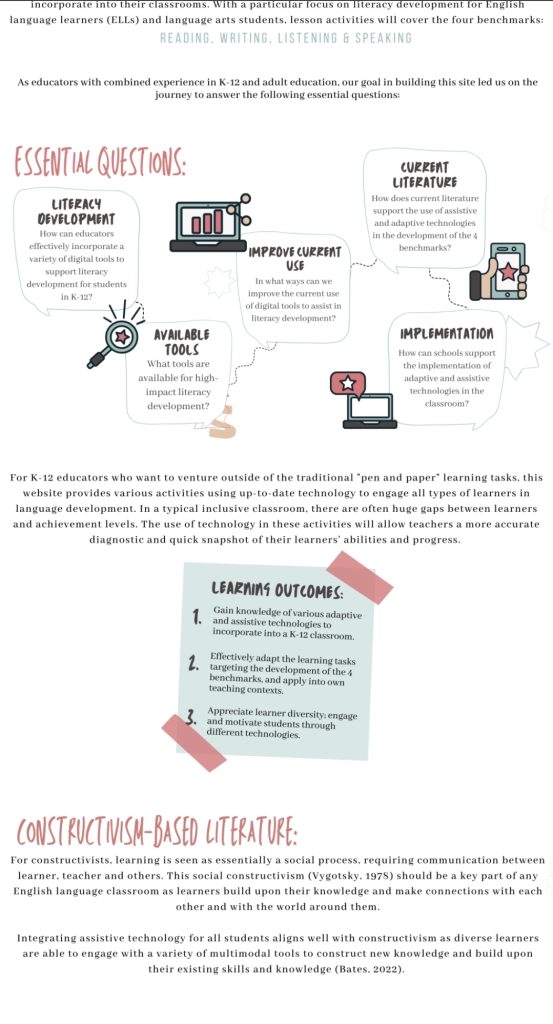
The informal learning opportunities throughout the course allowed me to reflect on my digital footprint and also pushed me to step out of my comfort zone and embrace these new connections. I especially connected with the ability to become more creative with digital media through Canva and WordPress. I found time flew by as I experimented with different styles, images and videos to integrate into my personal blogs and our group website, and the sense of accomplishment I felt after figuring out how to upload a picture or video, or combine design elements helped increase my self-confidence. I can see how the creation of my own individual stories through these blog-posts has strengthened my identity as I became engaged “in the process of reflection and self-authoring” (Jones & Leverenz, 2017, p. 68). As I reflected on our weekly readings and activities, I found ways to make sense of all this knowledge and experience and relate it to my identity as both a student and an educator. I’ve kept my English language teaching context at the forefront of all my reflections and hope that the learning and growth I’ve experienced here will propel me to share these connections and nodes of knowledge with students and fellow coworkers.
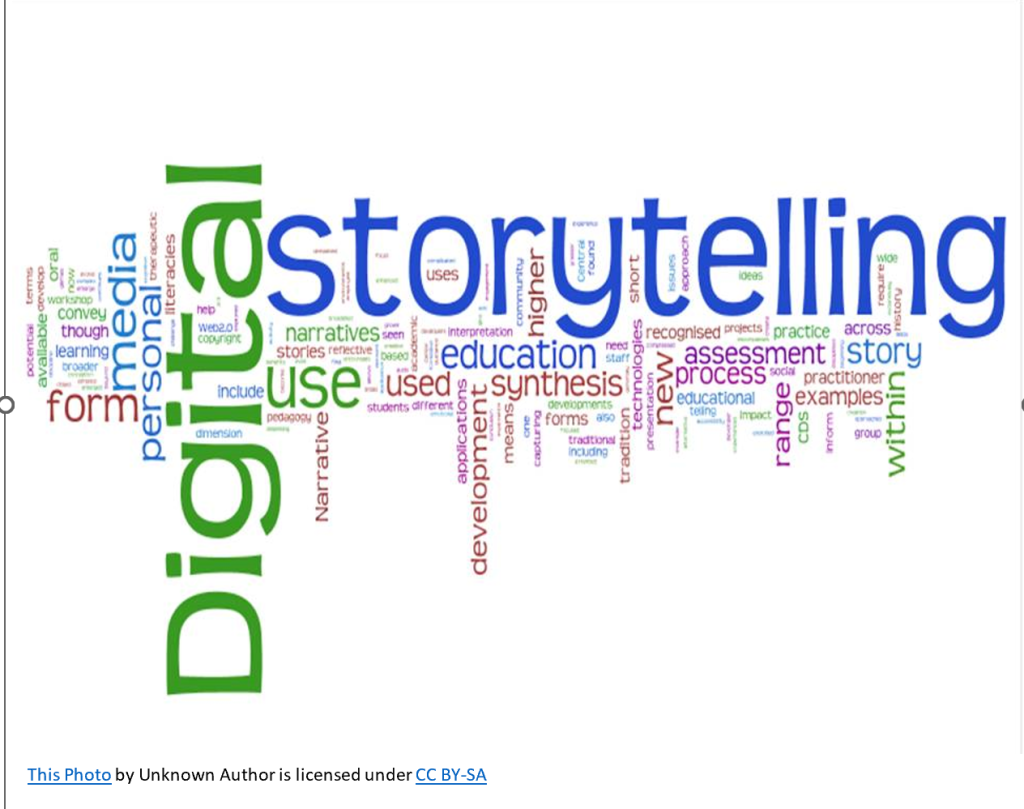
Digital storytelling has been a deep interest of mine because everyone has a story to tell! As educators, I think we sometimes get caught up in the need to impart knowledge onto our students, but it’s important to remember that each student has their own voice and story to tell. With English language learners, trying to tell this story and share their identity in a new language becomes even more challenging, yet the importance of empowering and guiding learners to share their identity is ever-present! The integration of multiliteracy learning in digital story-telling is also a way to build important digital literacy skills. For all learners, digital storytelling can be utilized in the classroom to motivate students to share knowledge and cultural practices. This type of multimodal activity can further contribute to inclusive learning spaces and “improve the integration of immigrant students’ home cultures in school curriculum…” (Burke & Hardware, 2015, p. 149). I found when working with students, if they are able to share their interests, skills or personal goals, they become more motivated and engaged in their communication. By incorporating different modes for learners to practice their communication skills through audio and video, we open up more possibilities for all voices to be heard. Furthermore, when we integrate technology in authentic and meaningful ways, learning becomes more about enjoying the journey rather than trying to get to the final destination!
References
Burke, & Hardware, S. (2015). Honouring ESL students’ lived experiences in school learning with multiliteracies pedagogy. Language, Culture, and Curriculum, 28(2), 143–157. https://doi.org/10.1080/07908318.2015.1027214
Jones, B. & Leverenz, C. (2017). Building personal brands with digital storytelling ePortfolios. International Journal of ePortfolio, 7, 67–91.